Traveling with breast milk, whether on a road trip, a flight, or just a busy day out, comes down to two main challenges: keeping it cold enough to prevent spoilage and warming it safely without access to a standard kitchen.
This guide breaks down the practical steps for managing breast milk on the go, based on guidelines from the CDC and TSA, to ensure your baby’s food remains safe from departure to destination.
The Science of Your Liquid Gold: Why Breast Milk Needs Special Care
Before diving into the logistics of traveling, it is crucial to understand exactly what you are transporting. Breast milk is not just food; it is a complex, living tissue.
Unlike standard formula, expressed breast milk contains active, living components that are highly sensitive to their environment:
- Macrophage Cells & White Blood Cells: These actively hunt and destroy germs, protecting your baby from infections.
- Secretory IgA (sIgA): An antibody that coats your baby's intestinal lining to block pathogens.
- Digestive Enzymes (like Lipase): These help your baby’s immature gut break down fats and absorb nutrients.
Because breast milk is biologically active, it reacts to temperature changes. If the temperature rises into the "Danger Zone" (between 40°F and 140°F / 4°C and 60°C) for too long, bacterial growth accelerates rapidly. Conversely, if exposed to extreme heat (like boiling water), the delicate proteins denature, and the living antibodies are instantly destroyed. This is exactly why specialized storage and precise warming are non-negotiable when you leave the house.
Phase 1: How to Store Breast Milk While Traveling
The key to traveling with expressed milk is maintaining the cold chain. Temperature fluctuations can lead to bacterial growth and spoiled milk.
• The CDC 24-Hour Rule: According to the CDC, expressed breast milk can be stored safely in an insulated cooler with frozen ice packs for up to 24 hours. Once you reach your destination, the milk should be used immediately, refrigerated, or frozen.
• TSA Flight Rules: If you are flying, the TSA classifies breast milk and formula as "medically necessary liquids." This means they are exempt from the standard 3.4-ounce (100ml) liquid limit. However, your ice packs must be completely frozen solid when going through the security checkpoint.
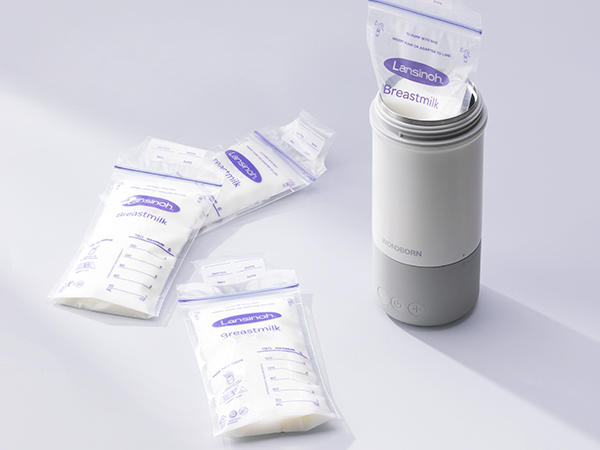
• Choosing the Right Gear: Using a standard lunchbox is not recommended for long trips. A dedicated WONDBORN Breastmilk Cooler is made of premium BPA-free materials and is specifically designed to maintain a strict cold chain. It features 4 built-in, independent ice packs, meaning you never have to worry about traditional ice bags melting into a watery mess inside your bag. Plus, it is perfectly sized to hold 2 independent baby bottles for your journey.
Handling Separation: The Fat Layer Phenomenon
When you store breast milk in a cooler during a long trip, you will likely notice that it separates into two distinct layers. A thicker, white layer forms at the top, while a clearer, bluish liquid settles at the bottom.
Do not panic—your milk has not gone bad. The top layer is the hindmilk (rich in essential fats for brain development and weight gain), and the bottom layer is the foremilk (high in water and lactose for hydration).
How to handle it on the go: When you take the bottle or bag out of your Breastmilk Cooler, do not shake it vigorously. Hard shaking can break down the delicate protein structures. Instead, gently swirl the container in a circular motion to reintegrate the fat back into the liquid before you pour it into your Warmer Cup.
Phase 2: How to Warm Breast Milk on the Go
Warming milk while traveling is often the most stressful part of the feeding routine. Traditional methods simply do not work well outside the house.
Relying on a cup of boiling water from a gas station or a flight attendant is a significant spill hazard in a moving vehicle or airplane. More importantly, the extreme heat will destroy the milk's immunological properties. Car plug-in warmers are an alternative, but they often take 15 to 20 minutes to heat a single bottle, which is impractical when a baby is crying.
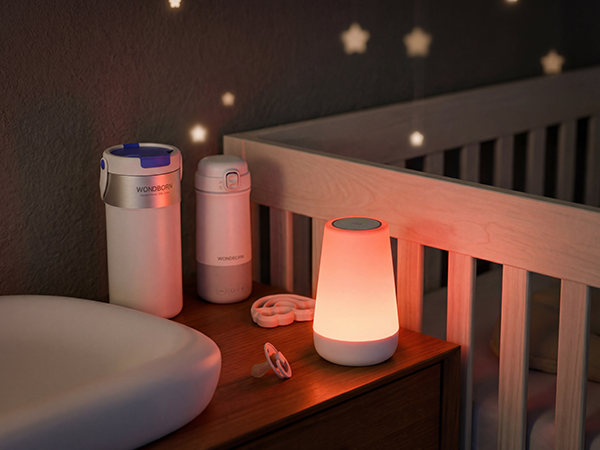
For a reliable solution, the WONDBORN Portable Bottle Warmer operates on battery power, removing the need for wall outlets or car adapters. It utilizes a direct-heating stainless steel interior to warm milk evenly to a precise temperature. This avoids the mess and unpredictability of water baths entirely.
Travel Warming Methods Compared
| Warming Method | Convenience on the Go | Temperature Safety | Speed |
|---|---|---|---|
| Gas Station/Flight Hot Water | Low (Messy, spill hazard) | ❌ High risk of overheating & nutrient loss | Fast, but dangerous |
| Car Plug-in Warmer | Medium (Tethered to car outlet) | ✅ Safe, but variable | ❌ Very Slow (15-20 mins) |
| Battery-Operated Bottle Warmer | ✅ High (Use anywhere, cordless) | ✅ Precise 1℉ control | ✅ Fast (<5 mins) |
Step-by-Step: The Travel Feeding Routine
- Prep: Pack your milk in the Breastmilk Cooler with solid ice packs before leaving the house.
- Transfer: When it is time to feed, open the cooler and pour the cold milk directly into the Warmer. The wide-mouth design minimizes the risk of spilling, even in a moving vehicle.
- Warm: Set the device to body temperature. You can handle your luggage or soothe your baby while the device heats the milk.
- Feed: Once it reaches the target temperature, the warmer will hold it there. Pour the warmed milk into your baby's bottle or attach a compatible nipple directly to feed.
FAQ: Traveling with Breast Milk