Pumping breast milk requires time and effort, making it essential to store and prepare it correctly. When it is time to use your frozen stash, the goal is not just to make the milk warm, but to safely preserve its nutritional and immunological benefits.
Heating breast milk incorrectly can destroy the exact nutrients you worked so hard to provide. This guide covers the science of warming breast milk, safe methods to use, and how to avoid the risks of overheating.
The Science of Overheating: What Happens to Breast Milk?
Breast milk is a living fluid. According to the American Academy of Pediatrics (AAP) and the Centers for Disease Control and Prevention (CDC), it contains active cells, antibodies, and enzymes that protect your baby from illness.
These immunological properties are highly sensitive to heat. Research shows that when breast milk temperatures exceed 104°F (40°C), vital components like white blood cells and immunoglobulins begin to break down. Therefore, the primary rule of warming breast milk is to use gentle, controlled heat to prevent degradation.
Safe vs. Unsafe Warming Methods
To protect your breast milk, it is important to understand which heating methods are safe and which pose serious risks.
| Warming Method | Is it Safe? | Impact on Nutrients | Overheating Risk |
|---|---|---|---|
| Microwave | ❌ No | Destroys antibodies and vitamins instantly. | Extremely High |
| Boiling Water | ❌ No | High heat degrades nutritional value. | High |
| Warm Water Bowl | ⚠️ Proceed with Caution | Safe only if water is below 104°F. | Medium |
| Precise Warmer | ✅ Yes | Preserves nutrients through controlled heating. | Zero |
Step-by-Step: How to Warm Frozen Breast Milk Safely
- Thaw First: The CDC recommends thawing breast milk in the refrigerator overnight. If you need it sooner, hold the frozen bag under running room-temperature tap water until it reaches a slushy state.
- Choose a Controlled Heat Source: Avoid boiling water. Use a bowl of warm drinking water or a temperature-controlled bottle warmer.
- Warm Gently: If using a warm water bowl, place the sealed bag or bottle inside and wait, swirling occasionally. If using a precise warmer, set it to body temperature (around 98.6°F / 37°C).
- Test the Temperature: Always test the milk before feeding. Place a few drops on the inside of your wrist. It should feel lukewarm, not hot.
A Controlled Solution: Using a Precise Warmer
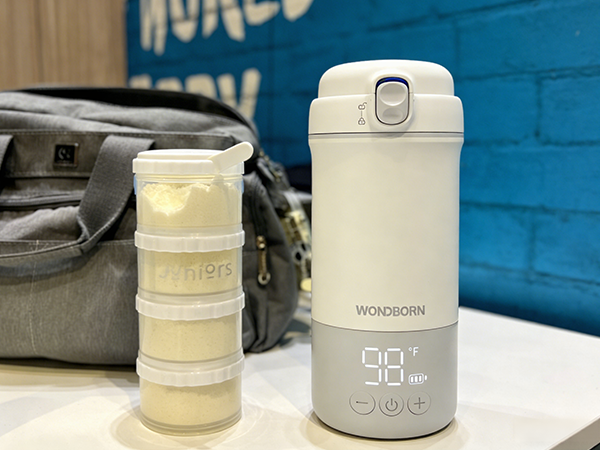
For parents who want to eliminate the risk of overheating entirely, using a temperature-controlled device is a reliable method. The WONDBORN Portable Bottle Warmer is designed specifically for this purpose.
Instead of guessing water temperatures or dealing with messy water baths, you can pour thawed or semi-frozen slushy breast milk directly into the wide-mouth cup. The device allows you to set the exact target temperature down to 1℉. The milk is heated directly against a food-grade stainless steel interior, ensuring an even temperature rise without the risk of hot spots or nutrient degradation. Once it reaches the safe target temperature, it stops heating and holds it there.
FAQ: CDC Guidelines for Warming Breast Milk
© 2026 WONDBORN - Feeding Simplified