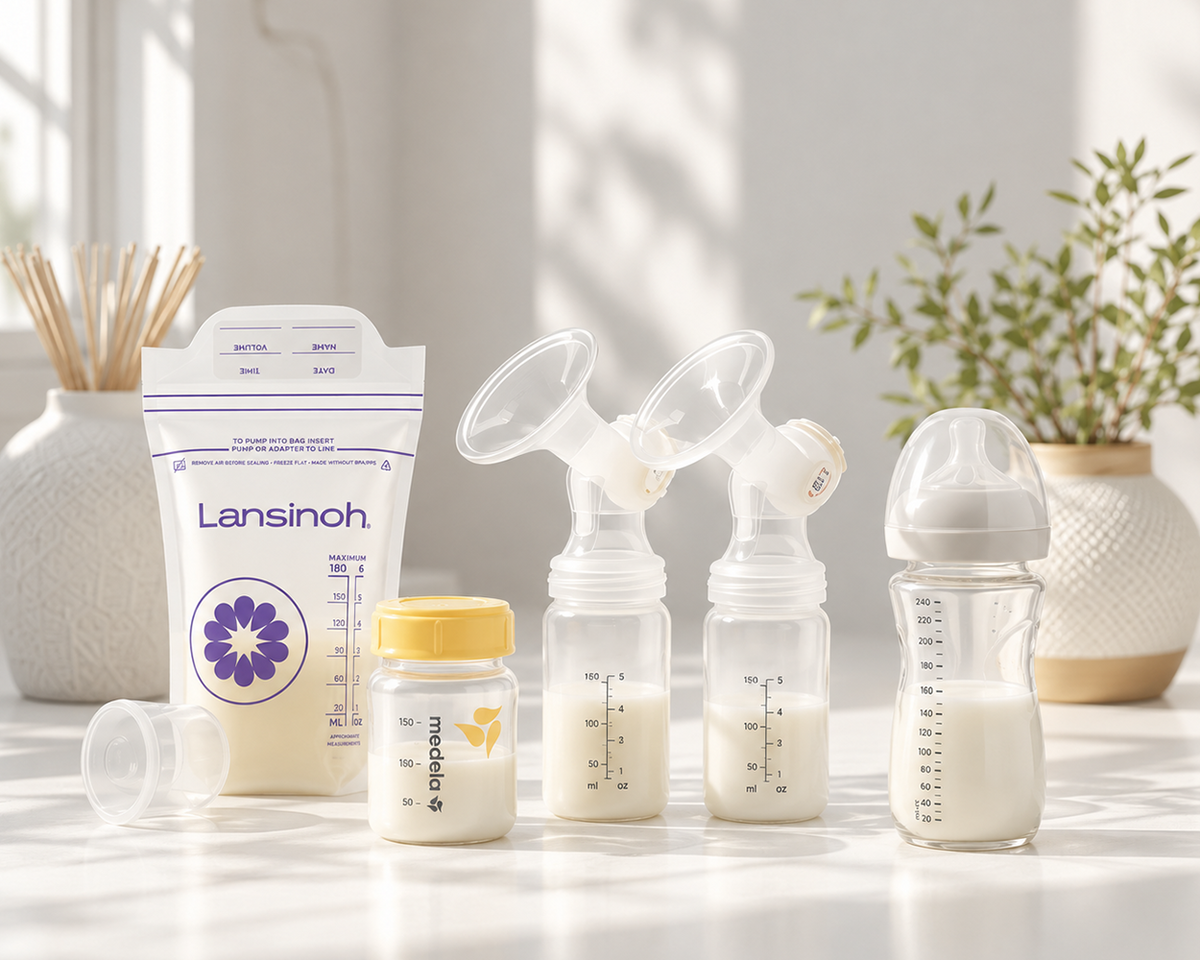
The best breast milk cooler depends on how much milk you need to carry, how long you'll be away from refrigeration, and whether you prioritize portability or active cooling.
In this guide, we compare the main types of breast milk coolers, explain what to look for, and highlight some of the best options for different pumping needs in 2026.
Quick Answer: Which Breast Milk Cooler Is Best?
What Is a Breast Milk Cooler and When Do You Need One?
A breast milk cooler is a portable storage solution designed to keep expressed breast milk cold when a refrigerator is not immediately available. Depending on the design, it may use insulation, frozen ice packs, cooling rings, ice, or active refrigeration.
A breast milk cooler can be particularly useful when you:
- Returning to work
- Bedside MOTN pumping
- Short outings: Shopping, outdoor activities, or running errands
- Long distance travel: Business trips, road trips, or air travel
According to CDC guidance, freshly expressed breast milk can generally be stored:
- At room temperature: Up to 4 hours when the temperature is 77°F (25°C) or below.
- In the refrigerator: Up to 4 days when kept at 40°F (4°C) or below.
- In an insulated cooler: Up to 24 hours when transported with frozen ice packs and refrigeration is not available.
The CDC’s 24-hour recommendation applies specifically to transporting freshly expressed breast milk in an insulated cooler with frozen ice packs. It does not mean that every breast milk cooler can safely keep milk below 40°F for 24 hours. Cooling performance depends on the cooler design, cooling method, starting milk temperature, milk volume, and surrounding temperature.
Once breast milk has been cooled, it should remain cold until it is used, refrigerated, or frozen.
What Types of Breast Milk Coolers Are Available?
Breast Milk Chillers*: A dedicated breast milk chiller is a compact breast milk cooling container designed specifically for storing pumped milk, typically using ice, frozen ice packs, or reusable cooling rings.
How to Choose the Best Breast Milk Cooler
Choosing the right breast milk cooler is about more than simply picking an option. We’ve highlighted several key factors to help you choose a breast milk cooler that fits your needs and gives you greater peace of mind when storing breast milk on the go.
Best Breast Milk Coolers for 2026
Cooler Bags
Best for carrying multiple bottles
Popular options:


Hard Coolers
Best for longer trips and maximum insulation
Popular options:


Mini Portable Fridges
Best for active cooling
Popular Options:


Breast Milk Chillers(Ice Filled)
Best for portable cooling and quick access to ice
Popular options:


Breast Milk Chillers(Ice Pack)
Best for portable cooling and more consistent temperature control
Popular options:


Our Top Pick for Everyday Pumping: WONDBORN Portable Breastmilk Cooler
Why we picked it
WONDBORN is our top pick for everyday pumping because it combines portable bottle storage, pre-frozen cooling rings, and a compact design in one dedicated breast milk cooler.
- • Cooling performance: In WONDBORN’s laboratory testing, the cooler maintained breast milk below 40°F for up to 24 hours under the stated test conditions.
- • Cooling method: Uses pre-frozen cooling rings; ice can also be used as an alternative
- • Capacity: 22 oz ( two 11 oz bottles)
- • Separate Storage: Two separate bottles help keep freshly pumped and already chilled milk separate
- • Portability: Compact design with a large, easy-carry handle
- • Ease of Use: Flip-open lid for easy one-handed operation, with bottle handles for convenient access
- • Material Safety: Made with food-contact-safe, BPA-free materials
- • Cleaning: Wide-mouth bottles and dishwasher-safe design for convenient cleaning
Independent YouTube Comparison Test & WONDBORN Cooling Test
- • Independent YouTube Comparison Test: YouTube creator @newparentsintraining tested several breast milk coolers side by side to compare their cooling performance. See the full comparison: Best Breast Milk Coolers 2026: 6 Products Tested for Cooling Performance.
The test showed that only WONDBORN and Momcozy reached below 40°F and maintained that temperature for an extended period. WONDBORN maintained the milk below 40°F for more than 12 hours in both the upper and lower bottles, while Momcozy maintained it for 12 hours in the upper bottle and more than 12 hours in the lower bottle.
- • WONDBORN Cooling Test: We also conducted our own Breast Milk Cooler Testing to evaluate WONDBORN’s cooling performance under controlled test conditions. We started with 10 oz of milk at 97°F, using four frozen cooling rings prepared at 0°F for 12 hours. In our test, both bottles remained below 40°F over a 24-hour period.

FAQ
What Temperature Should Breast Milk Be Stored At?
According to CDC breast milk storage guidance, recommended storage times vary by temperature:
- • Room temperature (77°F / 25°C or below): Up to 4 hours
- • Refrigerator (40°F / 4°C or below): Up to 4 days
- • Freezer (0°F / -18°C or below): Best within 6 months, although it can be stored for up to 12 months
For breast milk coolers, keeping milk at 40°F (4°C) or below is important for safe refrigerated storage.
Are Breast Milk Chillers Better Than Cooler Bags?
Breast milk chillers are generally better for portability, while cooler bags are better for carrying multiple bottles or pumping accessories. The better option depends mainly on how much milk you need to carry and how long you’ll be away from a refrigerator.
How long does breast milk last in a cooler with ice packs?
According to the CDC, freshly expressed breast milk can be transported in an insulated cooler with frozen ice packs for up to 24 hours when traveling. The milk should remain properly chilled throughout this period.
This 24-hour recommendation applies to an insulated cooler used with frozen ice packs; actual cooling performance can vary depending on the cooler, ice packs, milk volume, starting temperature, and ambient temperature.
(https://www.cdc.gov/breastfeeding/php/guidelines-recommendations/faqs.html)
Can I bring a breast milk cooler through TSA?
Yes. In the U.S., breast milk, ice packs, freezer packs, gel packs, and other items needed to transport expressed milk are allowed through TSA security, even when they exceed the standard 3.4-ounce liquid limit. Tell the TSA officer that you are carrying breast milk and related cooling supplies at the start of screening.
How Much Breast Milk Can a Breast Milk Cooler Hold?
Capacity varies by design. Compact breast milk chillers are typically designed for one or several pumping sessions, while larger cooler bags can hold multiple bottles. For example, the WONDBORN Portable Breastmilk Cooler holds 22 oz and can accommodate two 11 oz bottles.
Can You Put Breast Milk Directly Into a Breast Milk Chiller?
Yes, if the chiller is designed for direct breast milk storage. Always follow the manufacturer's instructions for filling, cooling, and cleaning to ensure proper use.
What Is the Best Breast Milk Cooler for Travel?
For short trips and daily travel, a compact breast milk chiller is usually the most convenient option. For longer trips or multiple pumping sessions, a larger cooler bag or hard cooler may be a better choice. WONDBORN Breast Milk Cooler is a strong option for parents who want a compact cooler with a 22 oz capacity and strong cooling performance.
What Is the Best Breast Milk Cooler for Working Moms?
For working moms, a compact breast milk chiller can be a convenient option for daily pumping and commuting. Among the options available, the WONDBORN Breast Milk Cooler offers a balance of cooling performance and convenience. In WONDBORN’s laboratory testing, the cooler maintained breast milk below 40°F for up to 24 hours under the stated test conditions. Its flip-open lid and bottle handles also make it convenient for pumping and commuting during a busy workday.
Can You Use Ice in a WONDBORN Breast Milk Cooler?
Yes, you can use ice in the WONDBORN Breast Milk Cooler. Its wide-mouth bottles provide enough space for ice to surround the storage bottles, helping keep the milk cold. This also gives you more flexibility if you don’t have pre-frozen cooling rings available, allowing you to use ice as an alternative cooling method.
Final Verdict
The best breast milk cooler depends on how you pump and travel.
- • For everyday pumping and short outings: choose a dedicated breast milk chiller/cooler.
- • For multiple bottles: choose a cooler bag.
- • For long trips: choose a hard cooler with sufficient insulation.
- • For active temperature control: choose a portable refrigerator.
- • For a compact everyday breast milk cooler: WONDBORN Breast Milk Cooler is our top pick for 2026.
Sources And Page Info
Content Sources
CDC — Storage and Preparation of Breast Milk
CDC — Travel Recommendations for Nursing Mothers
TSA — What Can I Bring? (Breast Milk and Baby Formula)
About this Page
Published: September 7, 2026
Last Updated: September 7, 2026
This page was last updated on this date. Updates may include minor edits, image changes, or other modifications to page content.
Disclaimer: This article is intended for general informational purposes only and is not a substitute for professional medical advice. For any questions or concerns related to your baby’s health, please consult a qualified healthcare provider. WONDBORN is committed to supporting parents with helpful and practical information, but individual experiences may vary. WONDBORN is not responsible for any consequences arising from the use of this content.