
Welcome to the realities of parenthood, where time is your most precious commodity. If you are still relying on boiling water bottle sterilization or using a basic microwave box, you likely already know the frustration: burnt fingers, warped plastics, and countertops cluttered with drying racks.
As your baby grows, their needs change, and your gear needs to keep up. When you are ready to reclaim your time, how do you sift through the noise to find the best feeding bottle sterilizer? Today, we are breaking down the 6 crucial factors you must consider before upgrading your routine—from tall bottle compatibility to whisper-quiet operation—backed by hygiene guidelines from authorities like the AAP and CDC.
1. Material Matters: Protecting Glass, Silicone, and Plastic
Your sterilizer must safely handle whatever bottle material you choose.
-
The Problem with Boiling: As the Cleveland Clinic warns, boiling plastic bottles at uncontrolled temperatures can accelerate their degradation. Furthermore, if you prefer glass, a rolling boil causes heavy bottles to clink together, risking micro-cracks and shattering.
-
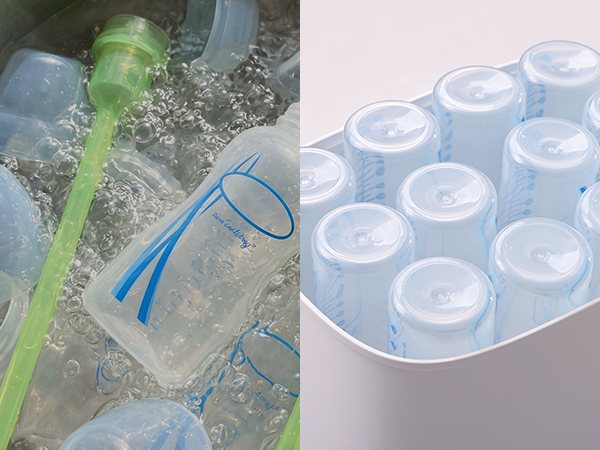
The Upgrade: A premium electric steam sterilizer provides a controlled, steady heat. Our machine features structured racks that keep items securely separated, making it the perfect glass bottle sterilizer while remaining gentle enough for delicate silicone breast pump valves.
2. The "Tall Bottle" Dilemma: Universal Compatibility
Newborns start with tiny 4oz bottles, but they quickly graduate to tall 8oz standard-neck bottles. Many parents buy a compact sterilizer only to realize a few months later that the lid won't close over taller bottles.
-
The Upgrade: Always look for a machine with generous vertical clearance. Our sterilizer is designed with an extra-spacious interior barrel, effortlessly holding up to 12 standard-neck 8oz tall bottles alongside your pump parts, ensuring it grows with your baby from day one to year one.
3. The Depth of Sterilization: 99.9% vs. 99.999%
According to the NIH's research on neonatal immunity, babies are highly vulnerable to environmental bacteria in their first year.
-
The Problem: Many standard machines offer a basic 99.9% kill rate. For highly resilient pathogens like Cronobacter (CDC Prevention Guidelines), leaving even a fraction of bacteria behind can be risky.
-
The Upgrade: You need hospital-grade peace of mind. Our sterilizer features an intensive 60-minute Auto Mode that guarantees a 99.999% high-efficiency deep sterilization. That extra 0.099% means leaving behind only 10 bacteria out of a million, rather than 1,000.
4. The Sound of Silence: Running Noise
-
The Upgrade: Opt for a sterilizer engineered for whisper-quiet operation. Our machine uses an advanced internal airflow design, ensuring that even during the most powerful HEPA-filtered drying cycles, the noise level remains low enough not to disturb your sleeping baby.
5. Simplicity is Key: Ease of Operation at 3 AM
-
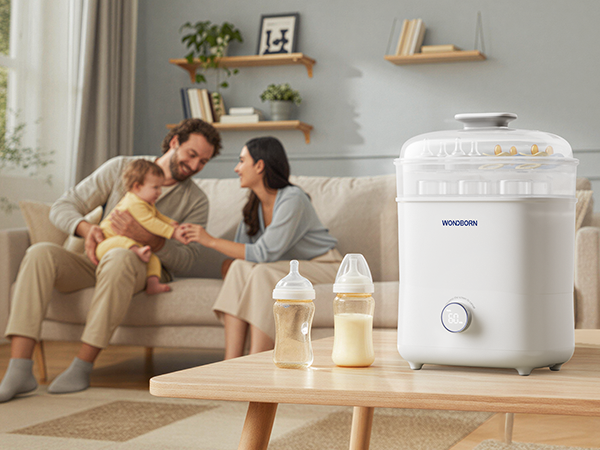
The Upgrade: Look for intuitive, one-touch solutions. Our 4-in-1 Sterilizer & Dryer features an upgraded LED control knob. With a simple twist and press, you can choose between Sterilize & Dry, Sterilize Only, Dryer Only, or 72-hour Storage.
6. Zero Learning Curve: Grandparent-Friendly
-
The Upgrade: A low learning curve is essential. Just add water, load the basket, and turn the dial. With our easily accessible stainless steel heating plate, descaling (removing mineral buildup) takes just minutes, ensuring your machine lasts for years.
Quick Comparison: Standard vs. Premium
7. Parent FAQ: Navigating Daily Sterilization Challenges
To help you navigate the realities of newborn care, we’ve answered some of the most frequently searched questions:
Q How long do sterilized baby bottles stay sterile?
If you leave freshly sterilized bottles out on a drying rack, they begin collecting airborne dust and bacteria almost immediately. If you assemble the bottles immediately after sterilizing and put the caps on, they remain sterile for about 24 hours. However, if you leave them inside an unopened electric steam sterilizer (especially one with a dedicated storage mode), they can remain sterile for up to 72 hours.
Q Can I use tap water in my baby bottle sterilizer?
While you can use tap water, pediatricians and manufacturers highly recommend using distilled water. Tap water contains minerals that quickly leave hard, white limescale buildup on the stainless steel heating plate. If you must use tap water, you will need to descale the machine with white vinegar much more frequently to prevent the machine from breaking down or making loud noises.
Q How to prepare baby bottles for night feeds without losing sleep?
The secret to surviving night feeds is preparing a "Night Feeding Station" before you go to bed. Have your sterilized, completely dry bottles assembled and waiting. Pre-measure your formula powder into a travel dispenser. When the baby wakes, simply pour water into the sterile bottle, add the pre-measured powder, shake gently, and cool if necessary.
Q How do you sterilize baby bottles while traveling or on the go?
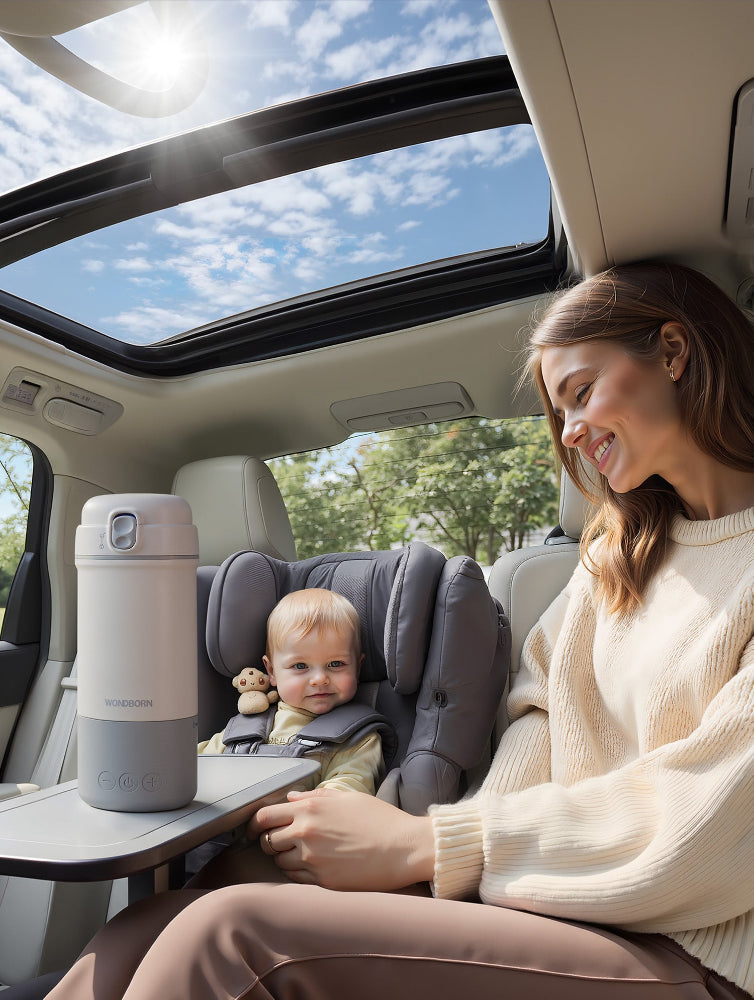
For a day trip, run a full sterilization cycle at home the night before. Assemble the completely dry bottles, put the caps on tightly, and store them in a clean zip-top bag. For overnight trips where you can't bring a large appliance, microwave steam bags or cold-water sterilizing tablets are excellent temporary solutions.
Conclusion
Upgrading your daily routine shouldn't be stressful. By focusing on material safety, tall bottle compatibility, noise levels, and ease of use, you can find a machine that truly lightens your load. Invest in the best feeding bottle sterilizer today, and reclaim those precious hours to spend where they matter most—with your baby.