
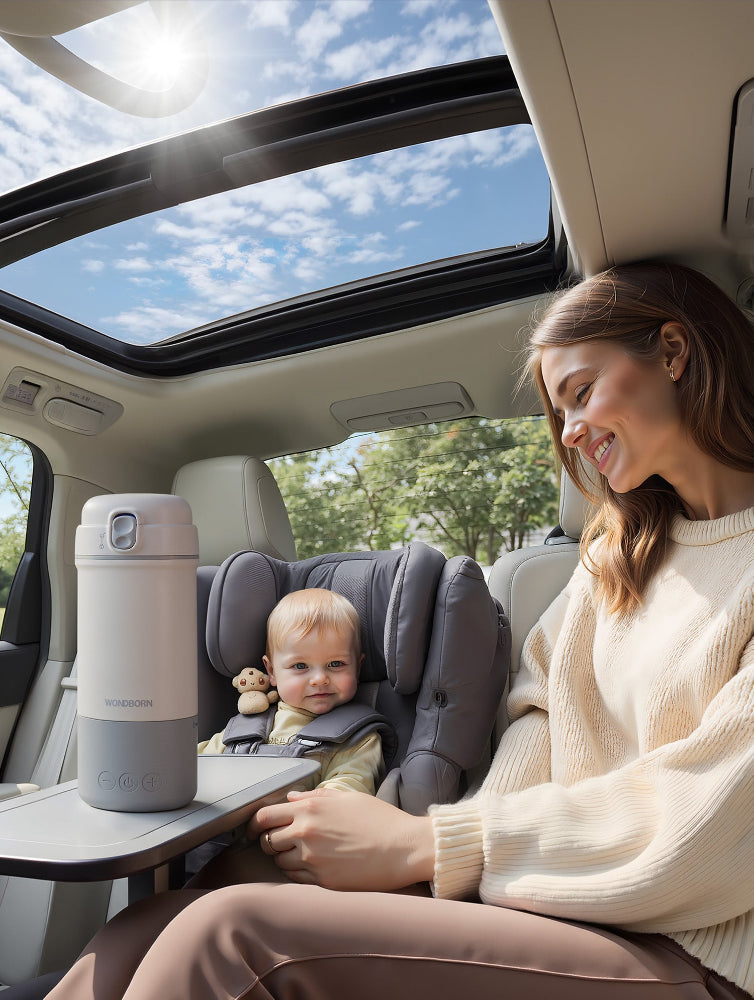

Surviving the first year of parenthood often comes down to mastering logistics—specifically, managing your baby's feeding schedule. Whether you are pumping at work, running errands, or managing midnight wake-ups, you will constantly face the same two challenges: keeping milk safely chilled and warming it up to the perfect temperature.
This is why investing in a high-quality first years bottle warmer and cooler system is one of the smartest decisions you can make. Here is a look at why these two items are the perfect pair for your baby's first year.
To Warm or Not to Warm?
Before we discuss the safest ways to handle breast milk, it is important to state a medically backed fact: according to the Centers for Disease Control and Prevention (CDC), breast milk does not strictly need to be warmed. It is perfectly safe to feed your baby milk at room temperature or even cold, straight from your cooler.
However, what is medically acceptable and what your baby will actually drink are often two different things. Every family’s feeding journey requires a bit of trial and error:
- Scenario A: The "Cold/Room Temp" Baby. Some babies are perfectly happy drinking chilled milk. If this is your newborn, consider yourself lucky! All you need is a reliable, structured cooler to safely transport your milk, and you are ready to feed on the go.
- Scenario B: The "Body Temp" Preference. Most babies, especially newborns transitioning from nursing to bottle feeding, strongly prefer their milk at body temperature (around 98.6°F). While the CDC notes there is no chemical difference in digesting cold versus warm milk, pediatricians and lactation consultants often recommend warming for three crucial behavioral and biological reasons:
- Biological Mimicry (Familiar Security): Breast milk's natural temperature is 98.6°F. Warming milk replicates the sensory experience of nursing, triggering a natural relaxation response in a fussy baby.
- Reducing Aerophagia (Less Gas): According to the American Academy of Pediatrics (AAP), when babies fuss or fight a feeding, they swallow excess air (aerophagia), which directly leads to painful gas and spit-up. Warm milk encourages a smooth, calm feed, indirectly preventing this stomach discomfort.
- Caloric Conservation (The NICU Protocol): As documented in neonatal research published by the National Institutes of Health (NIH), premature infants are highly susceptible to "cold stress." Hospitals often warm milk so these vulnerable babies do not burn precious calories trying to heat the cold liquid inside their bodies. While full-term babies handle this better, warm milk still provides a comforting, energy-saving feed.
Whether your baby falls into Scenario A or B, having the right gear ensures you are prepared for anything.
Part 1: The Cold Chain (The Breastmilk Cooler)
Whether your baby likes their milk cold or warm, the CDC mandates that expressed breast milk must be kept cold during travel to prevent bacterial growth. Leaving it in a standard lunchbox with cheap ice packs is risky because temperatures fluctuate, and melting ice creates a wet, unhygienic mess around your bottles.
To safely transport milk, you need a dedicated WONDBORN Breastmilk Cooler. Here is what makes it essential:
- BPA-Free & Structured Design: Made from safe, premium materials, the cooler is structurally designed to hold exactly 2 independent baby bottles upright, preventing leaks during transit.
- 4 Independent Ice Packs: Instead of a single flimsy ice bag that melts into a puddle, it utilizes 4 built-in, independent ice packs that surround the bottles. This maintains a strict, dry cold chain (below 40°F) for hours without creating a watery mess inside your bag.
Part 2: Safe, Direct Heating (The Portable Bottle Warmer)
If your baby prefers Scenario B (warm milk), the next challenge is heating it safely when you are away from home. Relying on unpredictable hot water baths can quickly ruin a feeding session by overheating the milk and destroying valuable living antibodies.
To counter this, the WONDBORN Portable Bottle Warmer takes a completely different, safer approach:
- Direct-Pour, Wide-Mouth Design: Instead of screwing a bottle onto a heating base with leaky adapters, you simply pour the cold milk directly into the food-grade stainless steel cup.
- 1℉ Precise Temperature Control: You set the exact temperature (e.g., 98.6°F) to mimic mom's natural warmth. Once it hits the target, it stops actively heating and enters a Keep-Warm mode.
- Cordless Power: With a massive 12,800 mAh battery and pass-through USB charging, it works flawlessly whether you are in a car, at the park, or sitting on your living room sofa.
How They Work Together: The First Year Feeding Workflow
| Scenario | Step 1: Store (The Cooler) | Step 2: Heat & Feed (The Warmer) |
|---|---|---|
| Night Feeds | Keep the Cooler on your nightstand with pre-filled milk or water. | Pour chilled milk into the Warmer. Body temp in minutes while you stay in bed. |
| Daycare / Nanny | Hand the caregiver the Cooler with 2 perfectly chilled bottles. | They pour milk into the Warmer, avoiding overheating risks on a stove. |
| Road Trips | 4 independent ice packs keep milk safely chilled in a hot car. | Use battery-operated Warmer in the back seat without messy water spills. |
Conclusion
Managing breast milk or formula during your baby's first twelve months does not have to be complicated. By combining a rigid, dry-cooling Breastmilk Cooler with an adapter-free, precise Warmer, you build a complete first years bottle warmer and cooler system. This perfect pair ensures that no matter your baby's temperature preference, their milk is stored safely and prepared perfectly every single time.
Resource: Centers for Disease Control and Prevention (CDC) - Proper Storage and Preparation of Breast Milk.
Resource: American Academy of Pediatrics (HealthyChildren.org) - Baby Burping, Hiccups & Spit-Up.
Resource: National Institutes of Health (NIH) / PMC - From Warm to Cold: Feeding Cold Milk in Preterm Infants (Discussing Cold Stress).


