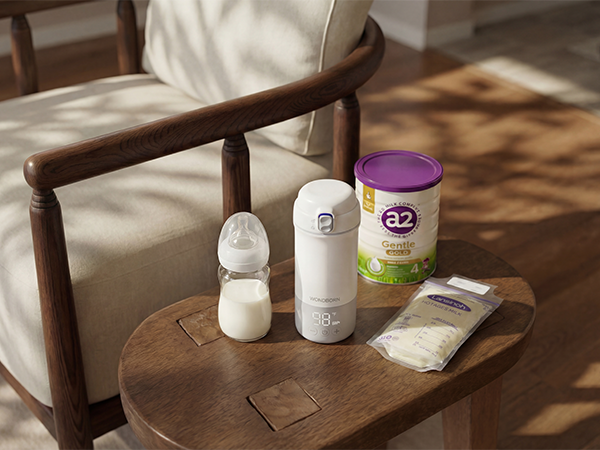
When parents build their newborn essentials checklist, they prepare for everyday challenges: diaper blowouts, sleep regressions, and teething. But what happens when the unexpected strikes? Severe storms, hurricanes, and unexpected grid failures can instantly plunge your home into darkness.
When the world outside is unpredictable, your primary concern is simple: How do I ensure my baby is fed safely? Preparation is the key to peace of mind. By understanding official disaster feeding guidelines and having the right off-grid gear, like a high-capacity USB bottle warmer, you can navigate these challenges calmly. Here is your ultimate emergency feeding guide.
Part 1: The Official Guidelines for Feeding in a Crisis
Before discussing heating methods, it is crucial to understand the basics of infant feeding during a disaster, especially when clean water and sanitation are compromised.
1. Breastfeeding: The Safest Option
Even during natural disasters, breastfeeding remains the safest feeding method. Breast milk actively protects babies from illnesses like diarrhea and respiratory infections, which is vital when unsanitary conditions increase the risk of disease.
- • Preparation: Always wash your hands or use a 60%+ alcohol hand sanitizer before feeding.
- • Learn Hand Expression: If the power grid goes down, your electric breast pump may become unusable. Learning how to hand express milk beforehand is a vital survival skill.
- • Stay Together: Keep your baby close to you during a disaster. This emotional comfort makes it easier to continue nursing and helps maintain your milk supply.
2. Safe Formula Feeding Practices
If your baby relies on formula, strict hygiene becomes your top priority.
- • Ready to Feed: Whenever possible, choose RTF liquid formula during an emergency, as it requires no additional water.
- • Safe Water Rules: If you must use powdered formula, use bottled water. If unavailable, tap water must be boiled for 1 minute and allowed to cool. Always check your local government’s water status.
- • Sanitation: Wash feeding supplies with safe (bottled, boiled, or treated) water. According to the CDC, any bottle nipples or pacifiers that have come into contact with floodwater must be thrown away immediately.
Part 2: The Danger of Makeshift Emergency Heating
While babies can safely drink cold or room temperature milk, many parents still need a safe way to warm breast milk or water to soothe a stressed baby. When the power goes out, a traditional plug in bottle warmer becomes a useless piece of plastic. Out of panic, parents often resort to makeshift heating methods, like boiling water over a camping stove.
This is incredibly risky. The CDC explicitly warns against heating breast milk directly on a stove or using methods that create uneven "hot spots," as extreme and unregulated temperatures can instantly destroy essential nutrients and cause severe burns to your baby's mouth. Furthermore, struggling in the dark with pots of boiling water and a crying baby is a recipe for disaster.
Part 3: Why a High-Capacity USB Warmer is Your Safety Net
During an outage, you need reliable, safe, and long-lasting off-grid power. This is why adding a battery-operated tool like the WONDBORN Portable Bottle Warmer to your emergency kit is a game-changer:
- Massive 12,800mAh Battery (The 15-Heat Guarantee): While most portable warmers die after a few uses, this device packs enough power to heat 4oz of water up to 15 times. That covers a full 24-hour cycle of feeding without needing a wall outlet.
- Pass-Through Charging for Unlimited Power: If an outage lasts for days, the WONDBORN warmer supports pass-through charging. Plug it into a solar power bank or your car's USB port, and it will continue to safely heat your baby's milk while simultaneously recharging its battery.
- Safe, Illuminated Operation: Because it operates via a glowing digital screen with 1°F precision, you do not need to blindly guess the temperature in the dark. It stops exactly at body temperature (98.6°F), keeping your baby safe from burns.
- Easy to Clean: When running water is scarce, its completely detachable, wide-mouth stainless steel cup makes it much easier to wipe clean compared to narrow-neck warmers.
Conclusion: Preparation Brings Calm
We cannot control the weather, but we can control how prepared we are. By stocking up on the right supplies: hand sanitizer, bottled water, RTF formula, and a reliable, high-capacity USB bottle warmer—you ensure that when the lights go out, your baby’s feeding routine remains a safe, comforting constant.
Frequently Asked Questions
How long can the WONDBORN warmer maintain temperature during an outage?
With its high-capacity battery, it can maintain a set temperature for hours, ensuring milk is ready precisely when your baby needs it, even without grid power.
Is it safe to charge the warmer using a car outlet?
Yes, the USB compatibility allows you to charge from vehicles, portable power stations, or solar panels, making it an essential tool for long-term emergency scenarios.