
Wearable breast pumps have revolutionized motherhood. Slipping a pump into your bra means you can finally pump while working, driving, or holding your baby. But there is a hidden catch that every pumping mom quickly discovers: the cleaning process.
Wearable collection cups are bulky, curved, and packed with delicate, intricate silicone membranes. If you are exhausted by the endless cycle of scrubbing and drying, you aren't alone. Today, we are breaking down the science of breast milk hygiene, the hidden dangers of popular cleaning shortcuts (like dishwashers and boiling), and how to find the perfect sterilizer for wearable pump parts to reclaim your time safely.
1. The Science of Breast Milk and Cleaning Frequency
Breast milk is often called "liquid gold" because of its rich nutritional profile. However, NIH research on neonatal immunity shows that the exact things that make milk great for your baby—like high fat and protein content—also make it the perfect breeding ground for dangerous bacteria.
- The Milk Fat Problem: Milk fat leaves a sticky biofilm on silicone and plastic. If not removed completely, bacteria multiply rapidly, posing fatal risks like Cronobacter (CDC Cronobacter facts and Prevention Guidelines).
- How Often Should You Clean? According to the FDA's official breast pump cleaning guidelines and the CDC's infant feeding hygiene standards, you must wash your pump parts after every single use. Furthermore, they strongly advise sterilizing the parts at least once a day, especially for babies under 3 months old or those with weakened immune systems.
2. Debunking the 3 Most Common Cleaning Shortcuts
When you pump 6-8 times a day, it’s tempting to look for shortcuts. But when it comes to wearable pumps, these "convenient" methods often cause more harm than good.
❌ The Dishwasher: Cross-Contamination Station
Many moms toss their pump parts into the dishwasher. The problem? You are washing your baby's delicate feeding gear right next to plates covered in spaghetti sauce, raw meat juices, and grease.
The Risk: Food debris can easily get trapped inside the tiny valves of a wearable pump. Furthermore, the extreme heat of the dishwasher's bottom rack can warp expensive collection cups, compromising the pump's seal and ruining your milk output.
❌ Boiling Water: The Suction Killer
For decades, moms relied on boiling water bottle sterilization. But wearable pumps rely on razor-thin silicone duckbill valves and diaphragms to create suction.
The Risk: Subjecting these delicate silicone parts to a violent, uncontrolled rolling boil stretches them out. Within weeks, you will notice a drop in your pump's suction power. Plus, as the Cleveland Clinic warns, boiling certain plastics can accelerate wear and tear.
3. The Ultimate Solution: Large Capacity Steam Sterilization
To clean wearable pumps safely and quickly, you need an appliance built for modern parenting. Here is why upgrading to a dedicated breast pump sterilizer and dryer is a game-changer:
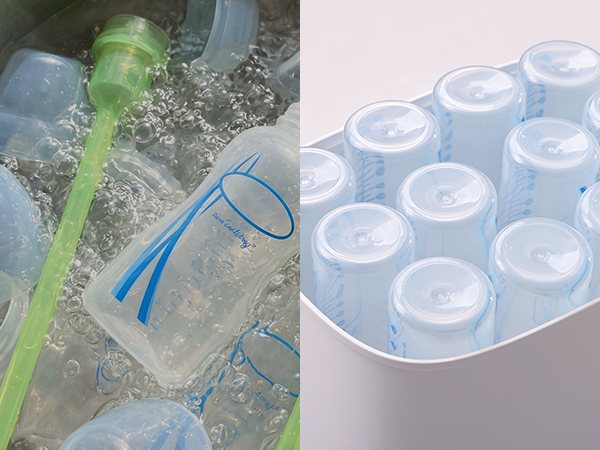
- Massive Capacity for Bulky Cups: You need a true large bottle sterilizer. Our 4-in-1 Sterilizer & Dryer features an oversized interior barrel. It can comfortably hold 12 standard bottles, meaning it easily swallows 4 bulky wearable collection cups at once, with a dedicated top basket for those tiny, easily lost duckbill valves.
- 99.999% Deep Sterilization: Unlike boiling water, electric steam provides gentle, controlled heat. Our 60-minute Auto Mode achieves 99.999% high-efficiency sterilization. The steam effortlessly expands to reach every microscopic corner of your uniquely shaped wearable flanges.
- HEPA-Filtered Pure Air Drying: Wearable cups are semi-enclosed. If you air-dry them on a rack, moisture gets trapped inside, leading to mold and fungal infections like Oral Thrush. Our machine uses a HEPA filter to blast purified, moisture-free air directly into the parts, drying them completely.
4. Step-by-Step: The Safest Routine for Wearable Pumps
- Dismantle Completely: Take apart every single piece of your wearable pump. Milk hides in the tiniest cracks.
- Wash with a Dedicated Basin: Following Healthline’s bottle washing guide, use a washbasin specifically for baby items.
- Sterilize & Dry: Place the bulky cups in the main barrel and the small valves in the accessory basket of your sterilizer. Select Auto Mode.
- Store Safely: Our machine doubles as a 72-hour sterile storage unit. When you need to pump, grab the parts directly from the machine.
(Note: If supplementing with formula, review WHO formula guidelines, NHS formula prep, and the AAP's mixing guide for safe practices.)
5. Pumping Mom FAQ: Solving Daily Hygiene Dilemmas
Q Is the "fridge hack" safe for wearable pump parts?
A: The "fridge hack" involves placing unwashed pump parts in a ziplock bag in the refrigerator between pumping sessions to save cleaning time. However, the CDC strictly advises against this practice. Breast milk residue can easily contaminate the parts, and refrigerator temperatures only slow down bacteria growth—they do not stop it. For the safety of your baby, especially a newborn, wash and sterilize parts after every single use.
Q Why are my silicone pump flanges and valves turning cloudy?
A: Cloudy silicone is usually caused by hard water mineral buildup or residual milk fat that wasn't completely scrubbed away. If you frequently boil your parts or use tap water in an electric sterilizer, limescale will eventually attach to the silicone. To prevent this, always use distilled water in your appliance. To clean cloudy parts, soak them in a 50/50 solution of white vinegar and water for 15 minutes, then rinse thoroughly.
Q Can I dry my breast pump parts with a paper towel or dish towel?
A: No. Using a shared kitchen dish towel, or even a paper towel, can introduce lint, dust, and new bacteria directly onto your freshly washed parts. Health experts recommend either air-drying on a dedicated, sanitized drying rack or using an electric sterilizer with a built-in HEPA dryer to ensure moisture-free, sanitary parts without the risk of cross-contamination.
Q How often do I need to replace wearable pump valves and membranes?
A: Even with careful washing and gentle steam sterilizing, delicate silicone parts naturally wear out over time. If you are an exclusive pumping mom (pumping 4 to 8 times a day), you should replace your duckbill valves and silicone diaphragms every 3 to 4 weeks to maintain optimal suction. If you use the boiling water method, you will need to replace them much more frequently due to heat degradation.
Conclusion: Reclaim Your Sanity
Being an exclusive pumping mom is a full-time job. You shouldn't spend your limited breaks scrubbing and boiling parts. By avoiding the pitfalls of dishwashers and boiling, and investing in a large-capacity breast pump sterilizer, you protect your pump's suction, your baby's health (Cleveland Clinic first-year feeding guide), and your own sanity.