
When it comes to baby care, every generation has its own tried-and-true methods. Ask your grandmother how to clean baby gear, and she will undoubtedly swear by a large pot of boiling water. It’s free, it’s accessible, and it’s how things were done for decades.
But as modern parents juggle work, sleep deprivation, and newborn care, we have to ask: is boiling water bottle sterilization really the best approach today? With pediatricians and health experts increasingly recommending the use of an electric steam sterilizer, it’s time to settle the debate. Let’s dive into the science, the safety risks, and why upgrading your routine might be the most important decision you make for your baby’s health.
The Truth About Boiling Water Sterilization
There is no denying that boiling water kills germs. Immersing feeding items in a rolling boil for 5 minutes is a recognized sanitization method by the CDC (Centers for Disease Control and Prevention). However, this traditional method comes with significant, often overlooked drawbacks:
-
Material Degradation and Safety Risks: Boiling water is an uncontrolled heat source. As the Cleveland Clinic warns in their safety guidelines, subjecting plastic baby bottles to extreme, continuous boiling temperatures can accelerate plastic degradation and increase the risk of microplastic release. Furthermore, a violent rolling boil causes items to thrash around. If you use heavy glass, the clinking can cause micro-cracks and shattering.
-
Severe Burn Hazards: Carrying a massive, heavy pot of boiling water across a kitchen is inherently dangerous, especially when you are operating on only two hours of sleep.
-
A Drain on Your Time: Boiling requires constant babysitting. You have to wait for the water to boil, set a timer, stand by the stove to ensure nothing melts against the side of the pot, and then carefully fish out each item with tongs.
Why Electric Steam Sterilization is the Superior Choice
Modern electric steam sterilization isn't just about convenience; it’s about scientific precision.
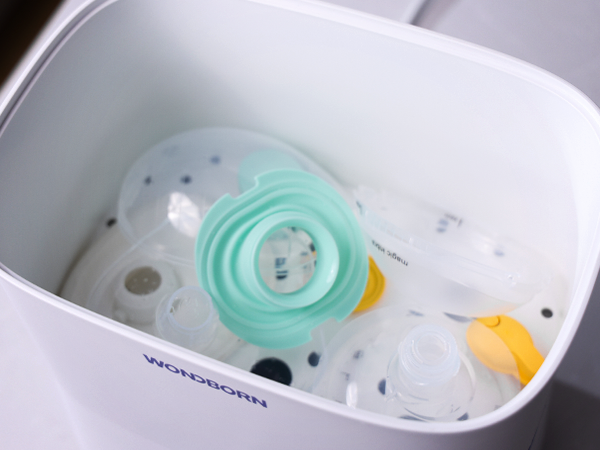
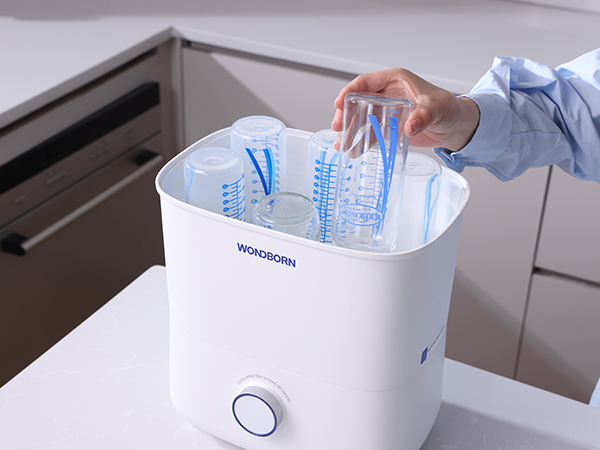
An electric steam sterilizer provides a controlled, enclosed environment. Instead of submerging items in turbulent water, it uses high-temperature steam that expands to penetrate even the most microscopic crevices of breast pump flanges and bottle nipples. The heat is evenly distributed, making it the perfect, gentle glass bottle sterilizer machine that prevents clinking and cracking.
More importantly, it offers a level of hygiene that boiling simply cannot match. While boiling relies on your timer skills, our machine features a dedicated 60-minute Auto Mode. This calibrated cycle delivers a 99.999% deep sterilization rate, offering hospital-grade peace of mind against stubborn pathogens.
The Missing Link: Why You Need a Bottle Steamer AND Dryer
There is a fatal flaw shared by both the boiling method and basic microwave sterilizers: the items come out soaking wet.
If you take sterilized bottles and place them on a drying rack, the entire sterilization process is instantly undone. The wet items act as a magnet for airborne dust, pet dander, and new bacteria. Lingering moisture is also the primary breeding ground for fungi, which can lead to painful Oral Thrush.
This is why a standalone steamer isn't enough. You need a 4-in-1 bottle steamer and dryer. Our machine utilizes a built-in HEPA filter, blowing only purified, fresh air into the bottles to ensure they are completely moisture-free, sealing the hygiene loop.
Head-to-Head Comparison
| Feature | ❌ Boiling Water Method | ⚠️ Basic Steam Sterilizer | ✅ Our 4-in-1 Sterilizer & Dryer |
|---|---|---|---|
| Time Spent | 20+ mins active babysitting stove. | 10 mins active setup. | 0 mins. One-touch auto cycle. |
| Material Safety | High risk of warping plastics and cracking glass. | Gentle steam, but items remain wet. | Gentle steam & perfect for glass. |
| Drying Method | Air dry on a rack (High contamination risk). | Air dry on a rack (High contamination risk). | HEPA-filtered pure air drying. |
| Storage | None. Must be used immediately. | None. Must be used immediately. | 72-hour sterile sealed storage. |
Parent FAQ: Bottle Hygiene & Maintenance
Q1: How long do you need to boil baby bottles?
A: According to health authorities, items must be submerged in a rolling boil for exactly 5 minutes. Boiling for too long accelerates the wear and tear on nipples and plastic components, while boiling for too little time fails to kill harmful bacteria.
Q2: Does boiling water ruin silicone breast pump parts?
A: Yes, over time. Silicone membranes and duckbill valves are delicate. The violent movement and extreme heat of boiling water can stretch and warp these parts, causing your breast pump to lose suction. A controlled steam environment is much safer for extending the lifespan of pump accessories.
Q3: Why is there white buildup on my sterilizer's heating plate, and how do I clean it?
A: That white buildup is limescale (minerals left behind by evaporating water). When researching cleaning bottle sterilizer methods, the easiest solution is descaling: pour a mixture of equal parts white vinegar and water onto the cold heating plate, let it sit for 30 minutes, and wipe it clean. Doing this weekly keeps your machine running perfectly.
Q4: At what age can you stop sterilizing baby bottles?
A: The NHS (National Health Service) and other pediatric organizations strongly recommend sterilizing all feeding equipment until your baby is at least 12 months old, as their immune systems are still highly vulnerable during their first year.
Conclusion
While boiling water is technically free, the true cost is paid with your time, your energy, and potential safety hazards. By upgrading to the best feeding bottle sterilizer—one that combines 99.999% deep sterilization with HEPA drying—you eliminate the guesswork, protect your baby's health, and reclaim at least an hour of your day.